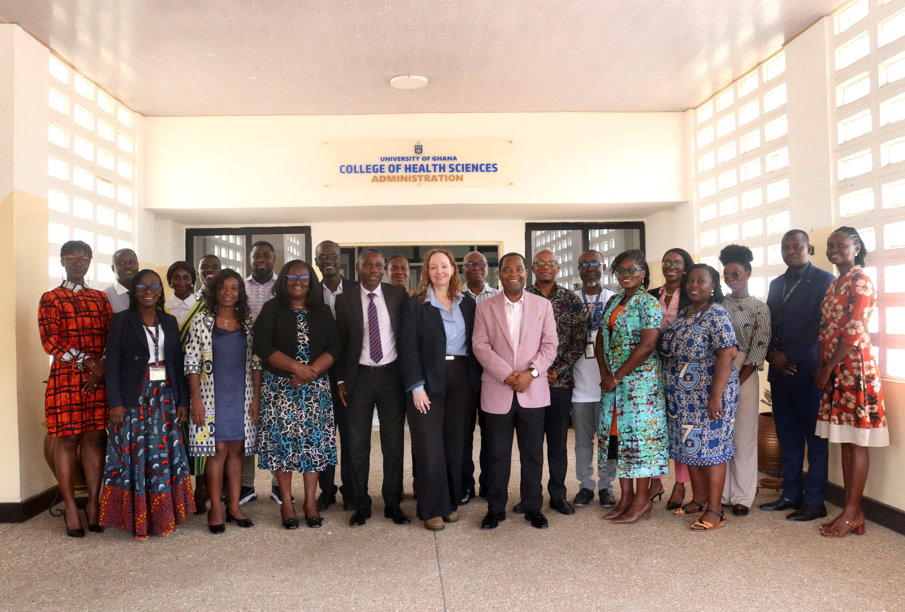
The College of Health Sciences (CHS) at the University of Ghana has taken a significant step toward strengthening international academic partnerships following a high-level engagement with the University of Manchester.
The meeting, held on 25th March, 2026 brought together the Provost, College Registrar, faculty, and research fellows of CHS to interact with Professor Lucie Byrne-Davis, Associate Dean for Internationalization of Teaching and Learning at the University of Manchester.
In his welcome address, Prof. Alfred Yawson, Provost provided an overview of the structure and mandate of the College, highlighting its six schools, one institute, and two centres located across the Legon and Korle-Bu campuses. He underscored the College’s commitment to training health professionals and advancing research that responds to national and global health needs.
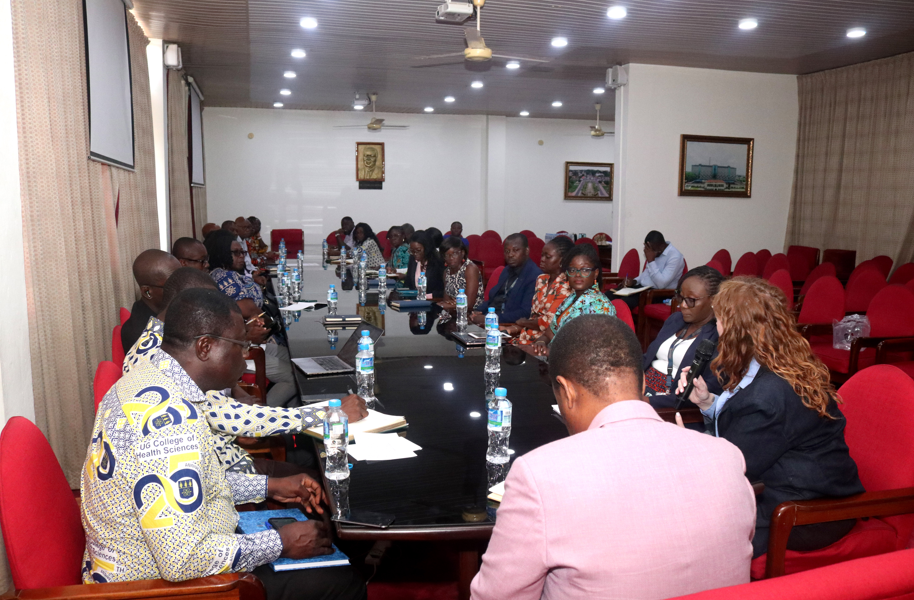
Professor Byrne-Davis, a renowned health psychologist and behavioural scientist, shared her enthusiasm about visiting Ghana and engaging with faculty across the College. She emphasized her role in fostering international partnerships and expressed her commitment to revitalizing existing collaborations between the two institutions. She also highlighted ongoing global research initiatives she is involved in, including studies on maternal care, antibiotic prescribing, and the integration of behavioural science into health systems.
A key focus of the engagement was the development of competency-based curricula for health professionals, including doctors, dentists, and nurses. The Provost noted ongoing collaboration between CHS and partners to standardize training through the Health Professions Education Unit (HPEU), with the aim of enhancing the quality and impact of healthcare delivery.
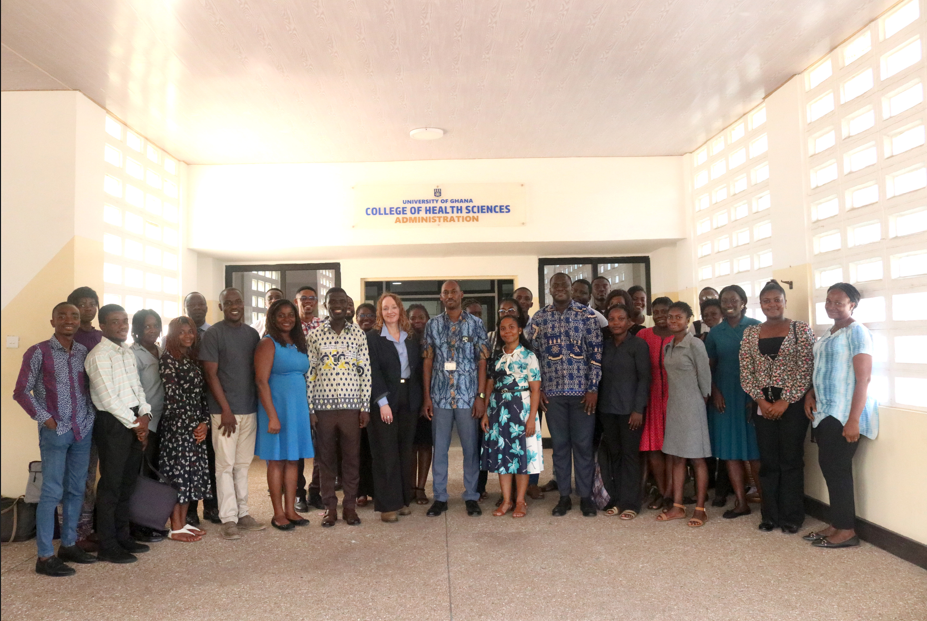
Discussions throughout the session centered on expanding collaboration in areas such as joint supervision of postgraduate students, dual degree programmes, faculty and student exchanges, and multidisciplinary research. Faculty members from various schools and research institutes presented their priority areas and explored opportunities for partnership.
The West African Genetic Medicine Centre highlighted its work in human genomics and sickle cell research, expressing interest in collaborative training and exchange programmes. Similarly, the Noguchi Memorial Institute for Medical Research outlined its research focus on infectious and non-communicable diseases and its newly introduced MPhil programme in One Health, while seeking avenues for joint research and clinical trials collaboration.
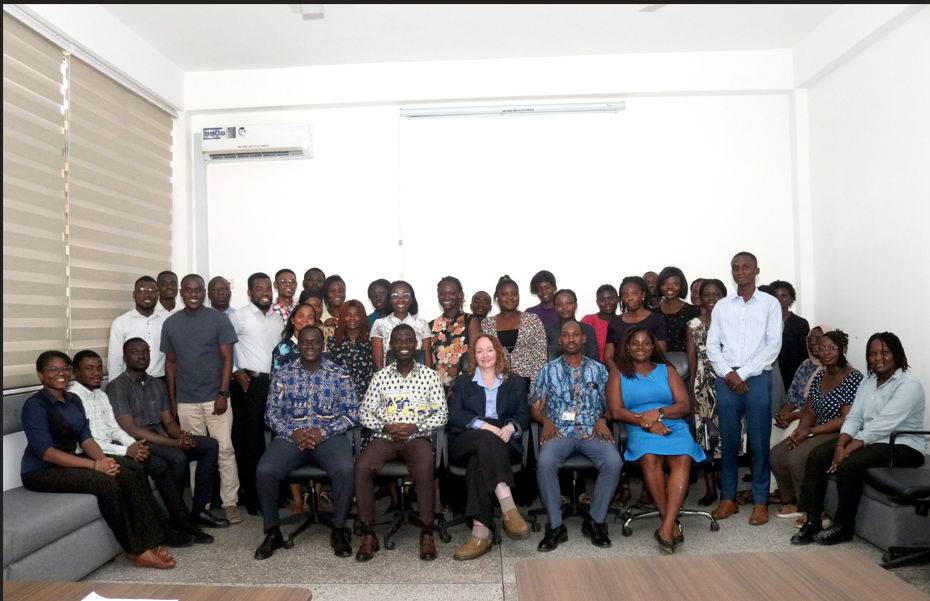
The School of Pharmacy emphasized its interest in pharmaceutical innovation, antimicrobial resistance, and natural product research, while exploring possibilities for co-curriculum development and dual degree programmes. The University of Ghana Dental School also identified opportunities in mental health, behavioural science, and biomaterials research, particularly in the study of oral-systemic health links.
Faculty from the School of Biomedical and Allied Health Sciences highlighted the need for capacity building through sandwich PhD programmes and international exposure, particularly in emerging areas such as respiratory care, physiotherapy, occupational therapy, and educational audiology. The School of Nursing and Midwifery proposed co-supervision of postgraduate programmes and virtual teaching collaborations to strengthen research output and global standards in nursing education.
Professor Byrne-Davis acknowledged the diverse strengths within the College and reiterated the University of Manchester’s openness to collaboration across teaching, research, and training. She also noted opportunities for global and dean’s fellowships, as well as short-term experiential learning placements for students.
The Provost concluded the meeting by encouraging faculty to clearly define and categorize collaboration areas to facilitate structured engagement between both institutions. He emphasized the importance of bilateral exchanges in research, faculty development, and student training.
The visit also included planned tours of CHS facilities across the Korle-Bu and Legon campuses to provide deeper insight into the College’s academic and research environment.
This engagement marks a renewed commitment to fostering impactful international partnerships that will enhance teaching, research, and healthcare outcomes in Ghana and beyond.