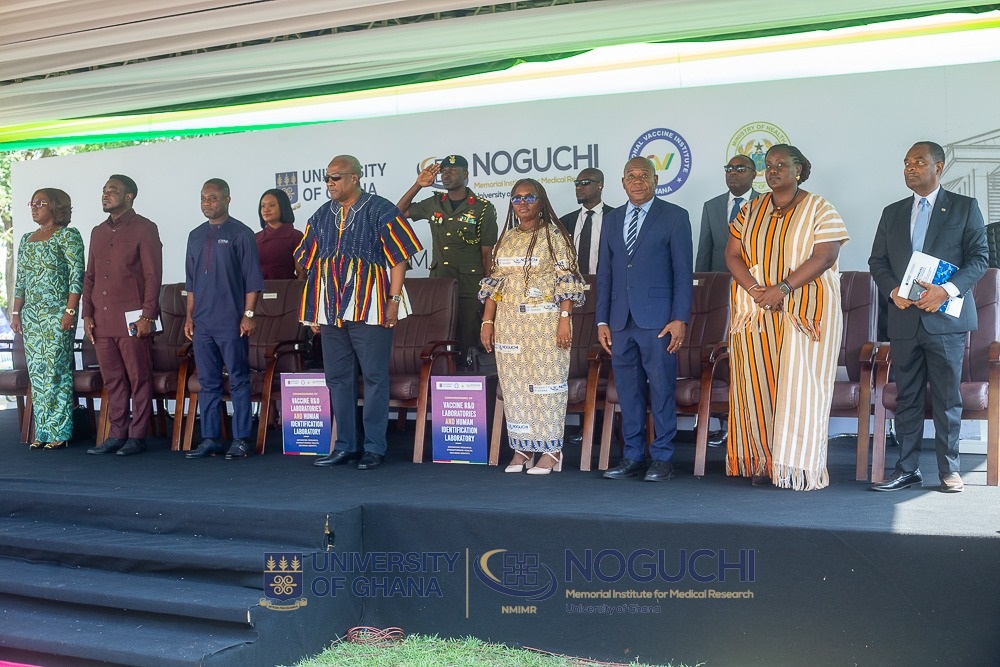
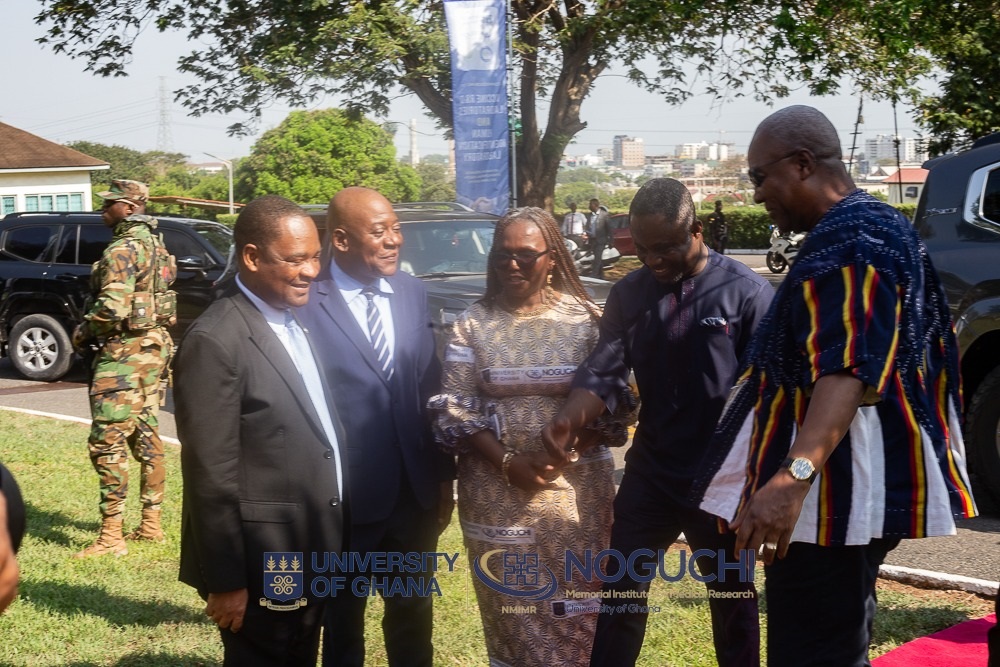
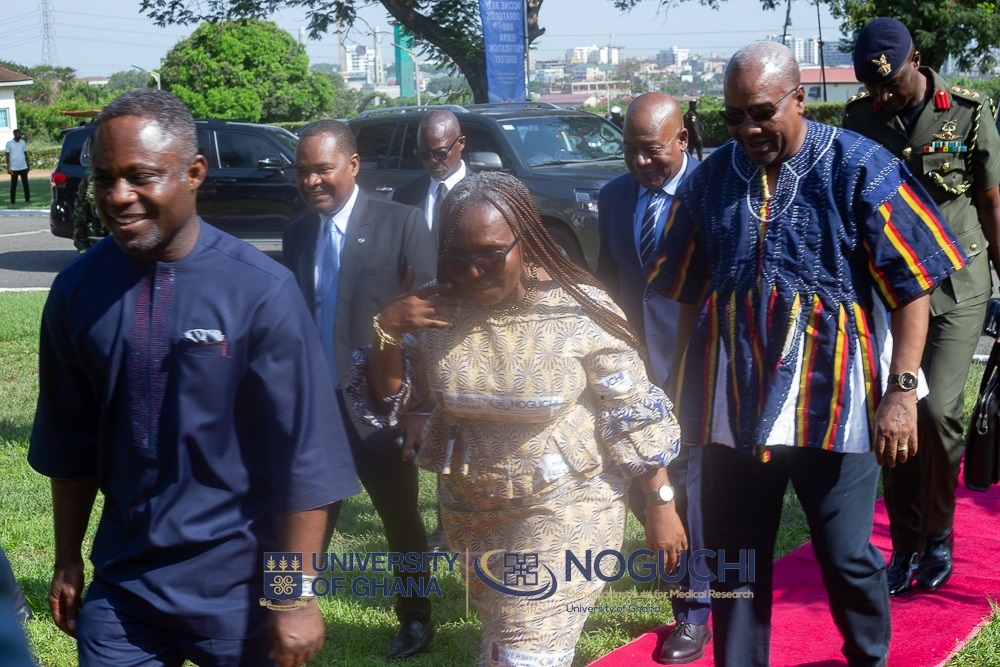
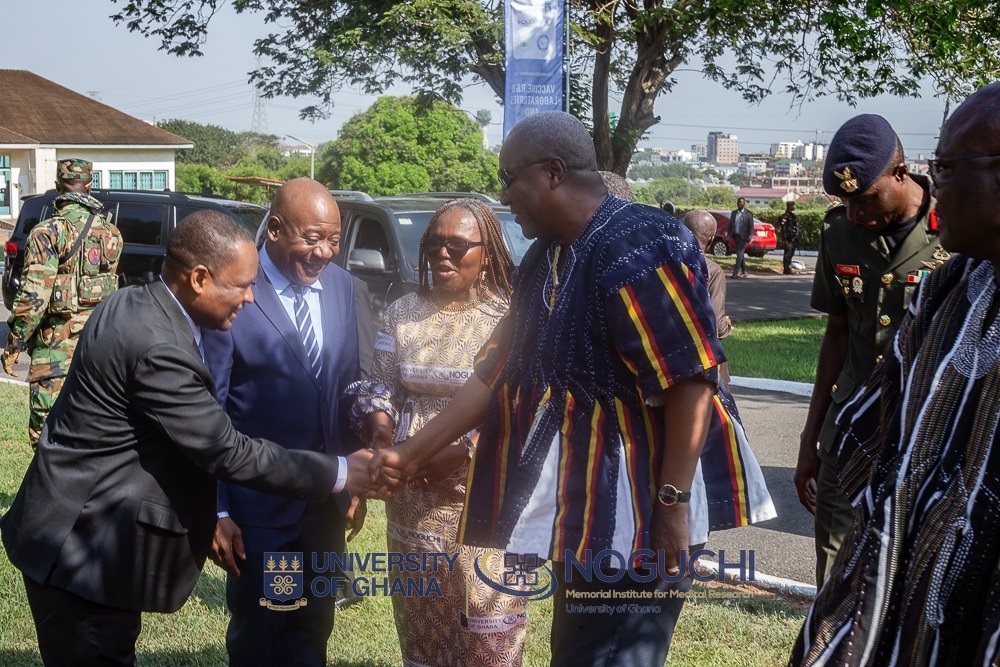
The University of Ghana’s premier biomedical research centre, the Noguchi Memorial Institute for Medical Research (NMIMR), has taken a major leap in advancing national health security and scientific self-reliance following the commissioning of two cutting-edge facilities by His Excellency President John Dramani Mahama.
The National Human Identification Laboratory (DNA Laboratory) and a dedicated Vaccine Research Facility have been equipped with mRNA and protein technology and were officially commissioned at the Institute on Wednesday, November 18, 2026. Designed as shared national resources accessible to researchers across Ghana, the laboratories significantly strengthen the country’s capacity to conduct advanced biomedical testing and vaccine development locally.
Enhancing National Forensic and Human Identification Capacity
Delivering the keynote address at the commissioning ceremony, President Mahama underscored the strategic importance of building domestic scientific infrastructure to eliminate Ghana’s reliance on foreign laboratories for critical sample analysis. Recalling the aftermath of the August 6 tragedy, during which human tissue samples had to be flown to South Africa for DNA profiling, the President described the situation as a national embarrassment that the new facility at NMIMR permanently resolves.
Beyond disaster victim identification, the National Human Identification Laboratory will bolster the nation’s justice delivery and social systems by providing timely, locally generated scientific DNA evidence to support criminal investigations including cases of sexual assault and homicide as well as resolving paternity, family relationship, and inheritance matters. President Mahama urged user agencies to ensure seamless inter-institutional coordination and prioritize compassionate, timely communication of results to affected families.
The commissioning of the Vaccine Research Facility places the University of Ghana and the nation among an elite group of only five African countries utilizing innovative mRNA technology for vaccine research and development.
Reflecting on the global supply chain vulnerabilities exposed during the COVID-19 pandemic, alongside ongoing regional threats from emerging infectious diseases such as Mpox, Lassa fever, Ebola, and Marburg, President Mahama emphasized that local research and manufacturing capacity are vital to Africa’s health sovereignty. He commended the National Vaccine Institute for its strategic collaborations with the International Vaccine Institute, Africa CDC, and other global partners, while urging the Ghanaian public to support ethically conducted clinical trials as an indispensable step in homegrown vaccine innovation.
Highlighting the human capital driving Ghana’s biotechnology agenda, President Mahama specially commended five Ghanaian scientists including distinguished faculty and researchers from the University of Ghana who received specialized mRNA training in Brussels and Accra and will lead capacity-building efforts nationwide.
To further anchor this scientific milestone, the President announced a $1 billion government allocation to the pharmaceutical sector under the New Economy’s Seventh Pillar to establish pharmaceutical and biomanufacturing hubs across the Eastern, Central, and Volta Regions, alongside a $46 million investment this year for childhood immunization vaccine procurement.
The addition of these landmark facilities reinforces the University of Ghana’s position as a hub of world-class research, innovation, and national development impact.