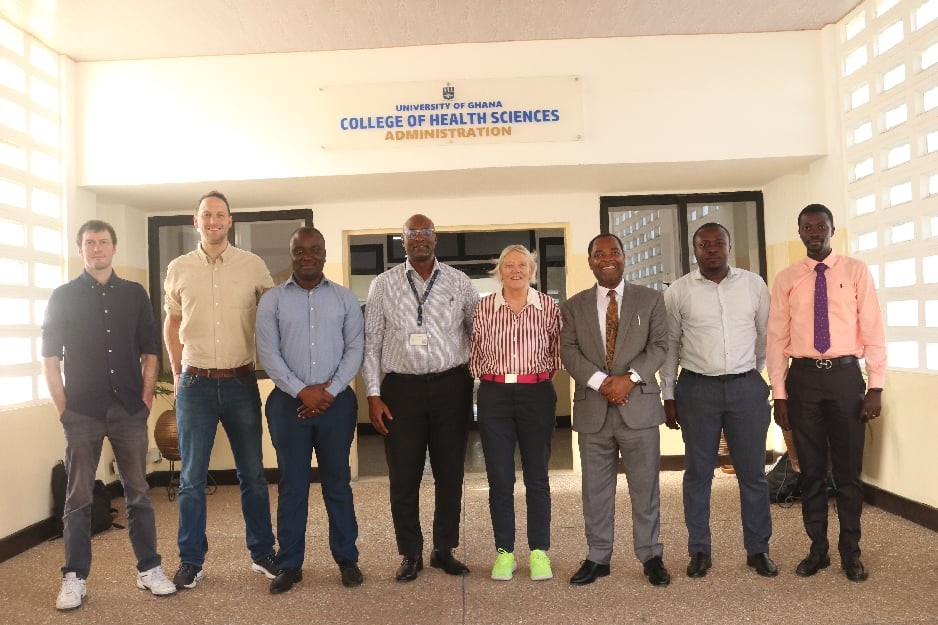
The July 2025 visit gave University of Ghana academics an opportunity to see how Brunel’s Older Adults Reference Group operates and discuss how its experience could inform the establishment of a similar group in Ghana.
LONDON, United Kingdom | July 2025
Academics from the University of Ghana visited Brunel University London in July 2025 for follow-up discussions on ageing research and the development of a Ghanaian reference group for older adults.
The visit followed a three-day workshop held in Accra in February 2025, where the two universities brought together older adults, researchers and healthcare professionals to discuss how older people could play a more active role in research affecting their health and wellbeing.
The July visit focused on learning from the experience of Brunel’s Older Adults Reference Group (BORG), meeting members of the research team and discussing priorities for continued collaboration between the two institutions.
The visiting academics were Professor Jonathan Quartey, Associate Professor of Physiotherapy at the University of Ghana’s College of Health Sciences, Professor Elsie Effah Kaufmann, Dean of the School of Engineering Sciences and Associate Professor of Biomedical Engineering at the University of Ghana, and Professor Samuel Sarpong Antwi-Baffour, Dean of the School of Biomedical and Allied Health Sciences. Their participation brought perspectives from health sciences and engineering to discussions about the future of the partnership.
Learning from BORG
A key part of the visit was the opportunity to experience BORG’s activities first-hand and understand how the group operates within Brunel’s research environment.
BORG provides a continuing forum through which older adults contribute their experiences and views to research, teaching and funding applications. Its members help researchers consider whether proposed work addresses issues that matter to older people and whether the way research is designed and communicated is appropriate for those involved.
The visit allowed the University of Ghana academics to discuss how elements of this approach could be adapted to Ghana. The aim was not simply to replicate the Brunel model, but to identify the arrangements, support and ways of working that could help a similar group function within the University of Ghana and reflect local needs.
The discussions also provided an opportunity to meet Brunel colleagues working in ageing research and public and patient involvement and engagement (PPIE). PPIE involves members of the public contributing to research decisions and priorities, drawing on their experiences to help shape the questions researchers investigate and how studies are conducted.
Building on the Accra workshop
The July visit continued work begun in Accra earlier in the year under the International Science Partnerships Fund (ISPF)-supported project, Establishing a Multi-National Older Adults Reference Network: Toward a PPIE Model for Mitigating and Managing Common Health Conditions in Ageing and Disease.
During the February workshop, participants discussed the health and social concerns affecting older adults in Ghana and identified potential areas for collaborative research. These included sarcopenia, dementia, mental health, chronic conditions, traditional medicine, social isolation and the challenges associated with retirement and maintaining independence.
The workshop also raised practical questions about how a Ghanaian reference group could be organised and sustained. Participants discussed membership, leadership, communication, transport and meeting costs, and the importance of ensuring that older adults received feedback on how their contributions influenced research.
The follow-up visit provided a further opportunity to consider these issues with the Brunel team and discuss progress towards establishing the University of Ghana Older Adults Reference Group.
At the time of the visit, proposals for the Ghanaian group had been prepared and were awaiting formal approval. The discussions therefore formed part of the work to move the initiative from its initial planning stage towards institutional establishment.
A partnership moving towards joint research
The visit also provided an opportunity to discuss wider research priorities and identify areas where the two universities could work together. Bringing colleagues from physiotherapy, biomedical engineering and other relevant disciplines into the partnership created scope for research that addressed older adults’ health and wellbeing from different perspectives.
For Brunel and the University of Ghana, the purpose was to develop a working relationship that extended beyond individual visits or meetings. This included exchanging knowledge, identifying shared research questions and considering how older adults could remain involved as projects developed.
The visit was an important step in that process. It allowed the Ghanaian academics to see BORG in practice, meet the people involved in its activities and continue discussions about how a similar model could work in Ghana.
The University of Ghana Older Adults Reference Group (UGORG) was formally launched in November 2025, following the earlier workshop and partnership discussions.
The July visit was therefore part of the groundwork for that development, helping to maintain the relationship between the universities and advance discussions about the role of older adults in shaping research.
The longer-term aim of the collaboration was to give older adults in Ghana a recognised and continuing opportunity to contribute to research priorities, while enabling researchers at both institutions to develop work informed by the experiences and concerns of the communities they serve.